The Slab Sets the Menu: Six Quays Where Lunch Arrives With the Tide
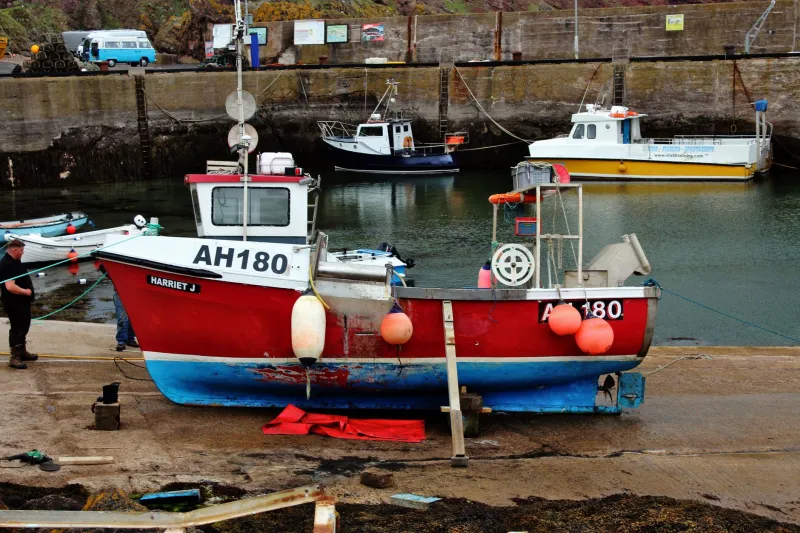
There is a particular kind of hunger that only develops on a harbour wall. It arrives somewhere between the first crate coming ashore and the smell of ice, diesel and sea water doing its thing. At a working quay, lunch is not a booking. It is a landing time. In 2026, the principle is unchanged: the boat is the reservation.
This is a food trail for people who would rather ask what came in this morning than study a wine list. It runs on tide tables, harbour-office noticeboards and the simple fact that fish, like trains, do not always run to the minute. Go with a flask, a folding bag and a willingness to eat whatever the morning has produced.
How to time lunch around a landing
Start with the tide, not the menu. Day boats often work around high water, and landing times shift with the moon, the weather and the skipper’s own clock. Check the harbour’s social feed, ring the harbour office or read the board by the slip. If a market or smokery has public opening hours, treat them as a hint rather than a promise. The best plan is a loose one: arrive mid-morning, walk the quay, then follow the activity.
Stand back from cranes, nets and reversing trailers. Ask before you photograph anyone working. And if a stall is shut, do not read it as bad luck — read it as a boat still at sea.
On the slab, look for clear eyes, stiff flesh, a clean briny smell and a label that tells you where and when it was caught. Ask the person behind the counter what landed today. Mackerel, gurnard, pollack, crab, scallops and whatever the inshore boats have found are all fair game. A good fishmonger will tell you what is best for the pan and what is best for a sandwich on the wall.
Brixham, Devon: follow the market morning
Brixham is a proper fishing town wearing a seaside hat. The fish market sits close to the quay, and the day boats give the place its early-morning pulse. You will not always get a ringside seat at the auction, but you can read the rhythm from the boxes, the ice and the forklifts. Aim for mid-morning, when the first rush has eased and the harbour cafés are filling with people in oilskins and walking boots.
Lunch is a simple equation: whatever the fishmonger recommends, eaten as close to the water as possible. If the quay is busy, take it to the breakwater and watch the trawlers. Afterwards, walk the South West Coast Path towards Berry Head for a proper lungful of air. Stay harbour-side if you can; an off-season B&B above the shops gives you first light over the masts without the summer scrum.
Newlyn, Cornwall: the slab before the swim
Newlyn does not dress up for visitors, which is exactly why it works. The market and fish merchants sit right by the working harbour, and the town has the busy, salt-scuffed feel of a place that earns its living from the sea. Time your visit for the morning landing and you will see the supply chain in motion: ice, boxes, vans, a quick chat between skipper and buyer.
Buy what is in front of you — a dressed crab, a fillet of something flat, a handful of scallops — and eat it on the quay or in the shelter of the harbour wall. Then walk east to Penzance or west towards Mousehole for a coast path leg that earns the second helping. For an off-season stay, look for a guesthouse in Newlyn or Penzance and use the bus or train to keep the day car-free. The Jubilee Pool is a fine bracing finish if the weather is doing its bracing thing.
Whitby, North Yorkshire: smoke, kippers and a abbey view
Whitby is a harbour town with a smokery habit. The smell of oak and haddock hangs over the quay, and the day boats bring in crab, lobster and whatever the North Sea is giving. Arrive before lunch, watch the boats come alongside, then follow your nose to the smokery. Kippers are the obvious purchase; a dressed crab or a pot of prawns are the quiet winners.
Eat on the quay steps or find a bench with a view of the swing bridge. Then walk up to the abbey for the classic Whitby loop — it is steep, but the reward is a proper appetite for tea. Stay in the old town if you want atmosphere; stay on the West Cliff if you want space and a sea view. Either way, book off-season and you will get the harbour back.
Mallaig, Highland: the ferry queue is the lunch bell
Mallaig is a working port with a ferry timetable and a fish quay, which makes for a compelling double act. The day boats land shellfish and white fish, and the smokehouse trade is part of the town’s identity. Time it for a late morning landing, then buy smoked fish, crab or a hot roll from a harbour outlet and eat it while the CalMac queue builds.
This is a place for a longer linger. Walk the coast path towards Morar for white sand and a sense of scale, or take the train over the Glenfinnan viaduct if the weather has other ideas. Stay in Mallaig itself — a harbour-view room makes the morning landing alarm almost pleasant — or base yourself in Morar for a quieter off-season break.
Looe, Cornwall: two harbours, one appetite
Looe splits itself between East and West, and the fish market sits on the working side. Day boats land crab, lobster and line-caught fish, and the quay has the easy, slightly scruffy feel of a port that knows what it is. Arrive mid-morning, check the board, and buy whatever is fresh. A crab sandwich assembled on the harbour wall is one of the great British lunches.
Walk the coast path towards Polperro for a half-day leg, or take the ferry across the harbour if it is running. Stay in East Looe for shops and cafes, West Looe for a quieter evening. Off-season, the town settles into itself and the fish still comes in.
Bridlington, East Yorkshire: shellfish and a bracing promenade
Bridlington’s harbour is a mix of shellfish boats, pleasure craft and a promenade that takes the wind seriously. The day boats land crab and lobster, and the harbour stalls and cafes follow the season. Time your visit around the morning landing, buy a dressed crab or a bag of prawns, and eat it looking at the boats rather than the menu.
Walk south along the promenade or take the cliff path towards Flamborough for a proper headland day. Stay near the harbour for a traditional seaside breakfast and an early start. In off-season, the town is quieter, the sea is louder and the crab tastes just as good.
The quay rules
Take a bag, a bit of cash and a willingness to change plans. Ask questions. Do not block the crane. And remember that the best lunch on a working quay is the one you did not book — the one that turned up on the tide, was filleted on a slab and eaten within sight of the boat that caught it. That is the St Portwey way: ports, paths and a place to stay, with lunch somewhere in between.