The Leeward Bed: Six Quayside Gardens for a Salt-Air Stroll
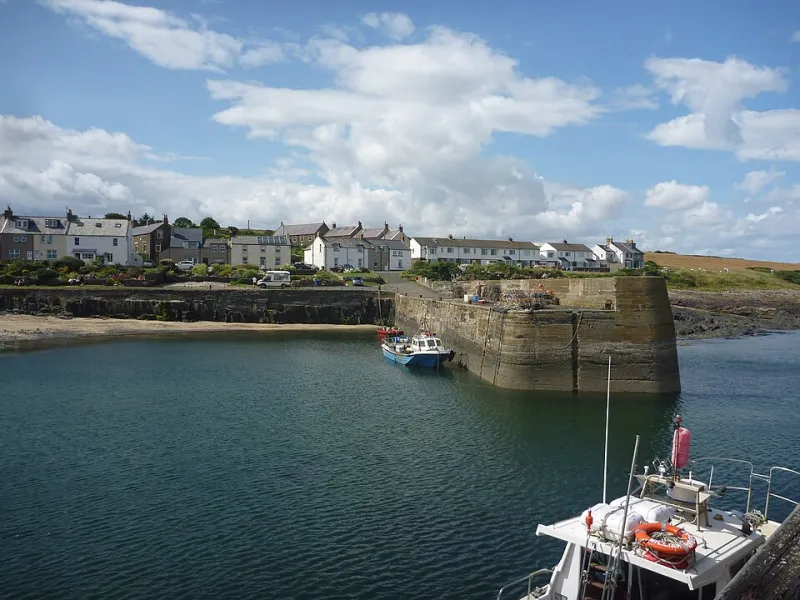
Photo: Richard West , CC BY-SA 2.0, via Wikimedia Commons
Working ports are not obvious garden territory. There is salt in the soil, diesel in the air and a fair chance that anything delicate will be sandblasted by the first easterly. And yet: look behind the net sheds, follow the wall round the harbourmaster's office, and you will often find a leeward bed doing its thing. Tamarisk, sea thrift, rosemary, escallonia. Plants that treat a gale as a bit of character-building.
This is a guide to six harbour gardens worth a slow turn — not grand estates with a sea view, but pocket plots, community beds and quayside planters that soften the edge of a working waterfront. Each comes with a short walk, a bench with a tide view and a nearby place to stay. Bring a flask. The bench is the point.
Padstow: Prideaux Place and the Camel
Start above the town. The gardens at Prideaux Place sit in a sheltered bowl over Padstow, where the Camel estuary widens into sand and the wind loses some of its bite. The planting is quietly coastal: rosemary hedging, tamarisk, lavender and sea thrift tucked into gravel. It is the sort of garden that makes you realise a salty microclimate is less a problem than a filter — anything that survives comes out looking deliberate.
Walk it off by dropping back to the harbour and picking up the Camel Trail for a mile or so along the old railway line. The bench you want is on the harbour wall near the lobster hatchery, looking across to Rock as the tide turns. Stay at The Old Ship Hotel on North Quay, which puts you close enough to hear the gulls rearranging themselves at dawn.
St Ives: Hepworth's Garden and Porthmeor
Barbara Hepworth's sculpture garden is not a harbour garden in the literal sense, but it is a pocket garden in a salt-air town, and it does the same job: it gives you somewhere to sit and recalibrate. The planting is surprisingly lush — aeoniums, palms, fleshy things that look as if they have no business in Cornwall until you remember Cornwall is basically a greenhouse with a sea wall. Sculpture and stems share the space; the effect is calm rather than precious.
From the harbour, walk west through the back streets to Porthmeor, then take the path above the beach for the view back over the roofs. A bench above Bamaluz or on the Porthmeor side gives you the tide without the crowds. Stay at Tregony Guest House, a short stroll from the quay and well placed for an early swim.
Tenby: The Tudor Merchant's House and Castle Hill
Tenby's harbour is all colour and bounce, but the garden behind the Tudor Merchant's House is a quieter thing: a small herb plot with thyme, santolina and sea kale, the sort of planting that would have kept a medieval household in flavour and medicine. It is not showy. It is useful. That feels right beside a working quay.
Walk from the harbour up to Castle Hill, then along the town walls towards North Beach. The bench on Castle Hill, looking out to Caldey Island, is one of the best tide-watching seats in Wales. Stay at The Normandie, which sits above the harbour and makes a good base for a blustery off-season break.
North Berwick: The Lodge Grounds and the Forth
North Berwick does the compact harbour thing well: lobster pots, a slipway, a beach that appears and disappears with the tide. The Lodge Grounds, a few minutes inland, are the town's sheltered lung — walled enough to take the sting out of the wind, with escallonia, sea buckthorn and beds that cope with salt spray. It is a good place to learn the local plant vocabulary: if it looks tough and slightly wind-combed, it belongs here.
Walk from the harbour along the seafront to the Scottish Seabird Centre, then loop back through the grounds. The bench on the harbour wall facing the Bass Rock is the one to aim for; on a clear day the rock looks close enough to touch. Stay at the Nether Abbey Hotel, a short walk west along the coast.
Scarborough: South Cliff Gardens and the Old Harbour
Scarborough's South Cliff Gardens have had a proper restoration, and it shows. The paths are clean, the planting is confident and the whole place feels like a Victorian seaside promise kept. Look for hydrangeas, tamarisk and sea holly — plants that can take a blast of North Sea air and still look as if they are enjoying themselves.
Walk down through the gardens to the Spa, then follow the promenade round into the old harbour. The bench on the South Bay promenade, just before the harbour arm, gives you the full theatre: fishing boats, gulls, a queue for whelks and the castle staring down from the cliff. Stay at the Palm Court Hotel, which is well placed for both the gardens and the harbour.
Oban: Dunollie Grounds and Kerrera Sound
Oban is a ferry town first and a garden town second, but the grounds at Dunollie Castle are a lovely exception. The planting is informal and salt-tolerant — fuchsia, montbretia, tough shrubs that have made themselves at home — and the view across to Kerrera does most of the work. It is a good reminder that a coastal garden does not need to be manicured to be memorable. Sometimes it just needs to hold its ground.
Walk from the harbour along the Corran Esplanade to Dunollie, then back via the town for a coffee. The bench on the Esplanade, looking out to Kerrera and the sound, is the place to end up. Stay at the Perle Oban Hotel, right on the waterfront and handy for an early ferry.
The Salty Microclimate Rule
None of these gardens are trying to fight the coast. They work with it: shelter, gravel, tough leaves, deep roots. If you are planting a quayside pot of your own, think rosemary, sea thrift, lavender, santolina or a small tamarisk. Give them drainage, ignore them slightly and they will reward you with that wind-combed look that no garden centre can fake.
And if you only do one thing on a harbour garden day, do the bench. Sit down. Watch the tide. Let the salt do its thing.