The Church by the Capstan: Six Harbour Naves Where the Sea Still Signs In
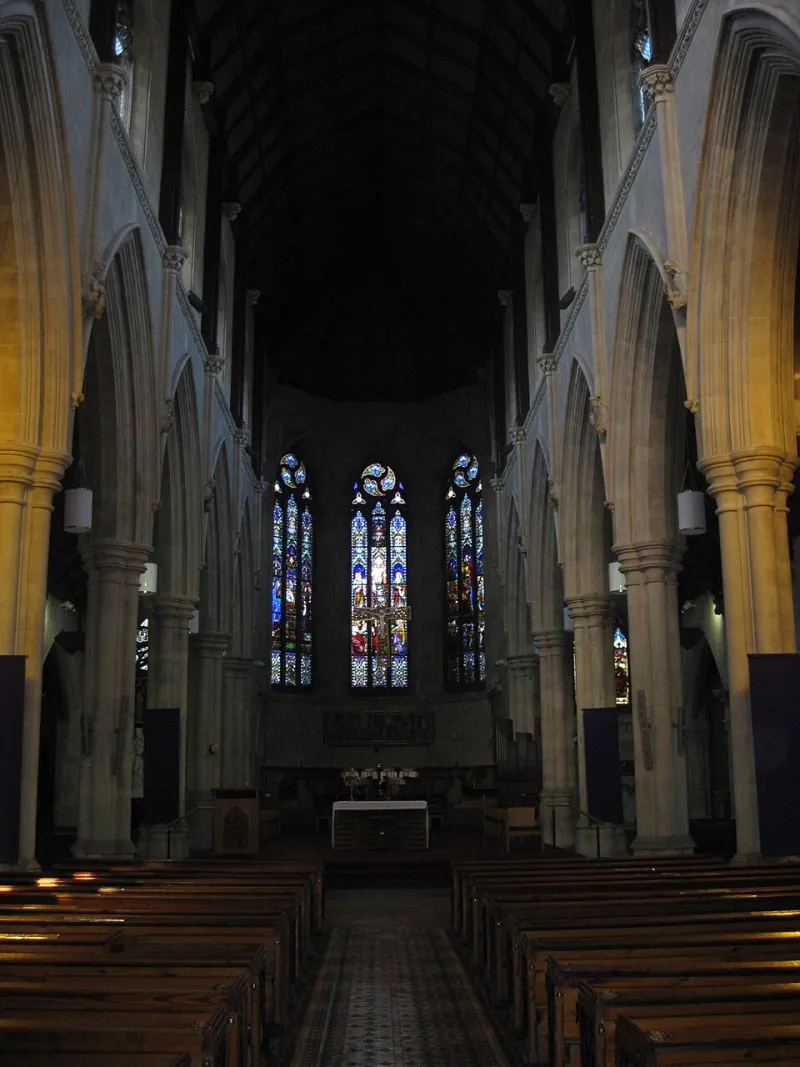
Photo: Cornelstown, Public domain, via Wikimedia Commons
Harbour churches are not museums. They are the quietest room in the port, the one where the town keeps its sea stories without shouting. You can walk in with wet boots, sit under a ship model, and read a memorial to men who never came back from the grounds. As the 2026 season winds down, these six walks pair a short quay-to-church stroll with the kind of details that reward a slow look. Take a torch, a flask and a bit of patience. The aisles do the rest.
Whitby: St Mary’s and the 199 Steps
Start on the quay by the old town, where the cobbles still smell of kipper smoke and the harbour mouth is a grey slice between the piers. The walk up to St Mary’s is the famous bit: 199 steps, a breath or two, and a churchyard that leans into the wind. Inside, look for the maritime memorials and the box pews that feel like small wooden cabins. The sea is in the hatchments and the names on the walls, and in the way the whole building sits above the town like a lookout.
Sheltered stop: drop back down to the old town for a café corner or a pint by the fire. The walk is short, but the steps earn it.
Hastings: St Leonard’s and the Old Town Net Sheds
From the fishing beach, walk up through the Old Town’s narrow streets to St Leonard’s. This is a church that has watched the fleet come and go for centuries, and the memorials inside carry the names of lifeboat men and fishermen rather than admirals. Look for the small plaques and the worn stone steps; they tell you more about the town than any information board. The walk itself is a lesson in how a port works: nets, boats, chandlers, then suddenly a quiet nave.
Sheltered stop: a chippy or a tea room in the Old Town, preferably one with a window full of harbour weather.
Great Yarmouth: St Nicholas and the Fishermen’s Aisle
Great Yarmouth’s St Nicholas is a big, sturdy church that has had a long relationship with the sea. Walk from the quay through the rows and side streets, and you get the sense of a port that has always been busy with smacks, drifters and herring. Inside, take your time over the maritime memorials and the traces of a fishing community that gave the church its character. It is not a delicate place. It is a working church for a working port, and that is the point.
Sheltered stop: a café or pub near the market, where the windows steam up and the talk is still about tides.
Rotherhithe: St Mary’s and the Thames Windows
Rotherhithe is a proper Thames-side puzzle: old stairs, new flats, and a church that has seen it all. St Mary’s sits back from the river, but the walk from the quay is full of clues: wall plaques, old wharves, the smell of mud at low water. Inside, look for the maritime memorials and the seafaring connections that run through the building. It is a good church for a damp afternoon, when the river is grey and the lights are on.
Sheltered stop: a pub with a river view, or a café near the overground station. Both work when the tide is doing nothing interesting.
Dover: St Mary’s and the Harbour Wall
Dover is a port that feels like a doorway, and St Mary’s has watched a lot of people go through it. Walk from the harbour wall, past the ferries and the old docks, and the church gives you a quieter angle on a town that is usually in a hurry. Look for memorials to seafarers and the layers of history that come with a cross-Channel port. The building has been knocked about and rebuilt, which feels about right for Dover.
Sheltered stop: a café near the marina, where you can watch the water and let the wind do its worst outside.
Wells-next-the-Sea: St Cuthbert’s and the Salt Marsh Gap
Wells is a small port with a big sky, and St Cuthbert’s is the anchor at the top of the town. Walk up from the quay, past the chandlers and the little shops, and the church appears as a solid, flinty presence. Inside, look for the maritime memorials and the model ships that keep the fishing and sailing life in view. It is a gentle walk, but it gives you the whole shape of the place: harbour, town, church, marsh.
Sheltered stop: a chip shop or café near the quay, with a bench outside for the brave and a warm corner for the sensible.
The Slow Way Round
None of these walks are long. That is the joy of them. You can do one in a morning, stop for soup, and still be back on the quay before the light goes. The trick is to look at the small stuff: the hymn boards, the scratchings near the door, the model ship that has hung there longer than anyone can remember. Harbour churches are not there to impress you. They are there to hold the town’s sea life in one quiet room. Walk in, sit down, and let the aisles do the talking.