The Hands That Hold the Harbour: Six Coastal Clocks for a Linger on the Quay
Harbour clocks do more than tell you it is nearly lunch. They organise the day: the ferryman’s first glance, the chandler’s opening shutter, the walker’s decision to push on or turn back before the light goes. Some are grand, some are stubbornly municipal, and a few are genuinely odd. All of them give a port walk a spine. So pack a flask, check the tide table, and treat these six timepieces as excuses to linger rather than deadlines to meet.
Greenwich: the ball, the gate and the river
Start where British time got bossy. The Shepherd Gate Clock at the Royal Observatory is the one with the 24-hour face, and the red time ball on the observatory roof is the seaside-ish ritual everyone remembers. The ball drops at 1pm, historically so ships on the Thames could set their chronometers without squinting at a pendulum. Even if you have seen it before, it is a fine thing to watch with a coffee in hand and the river breathing below.
Walk it as a loop: Cutty Sark, the Old Royal Naval College, the river path, then up through Greenwich Park for the view back over the masts and rooftops. It is not a working harbour in the chandler-and-crane sense, but the maritime timekeeping story is here, and the Thames still does a good line in grey water and purposeful boats. For an early harbour look, stay on the Greenwich or Deptford side and walk down before the market crowd arrives.
Bristol: two hands, one argument
The Corn Exchange clock is a proper curiosity. It famously carries two minute hands: one for Greenwich Mean Time and one for old Bristol time, which ran about eleven minutes behind. That is the kind of local stubbornness you want from a port city. Stand beneath it, look towards the Floating Harbour, and imagine a merchant trying to catch a tide while the clock quietly disagreed with itself.
From here, the walk writes itself: Corn Street, the old exchange, then down to Welsh Back and along the harbour to Queen Square. It is urban, but there is enough water, bridge and boatyard clutter to keep the port feeling alive. Base yourself near the harbour for a morning wander before the cafes fill; off-season Bristol is particularly good at looking damply romantic without trying.
Liverpool: the Liver Birds keep watch
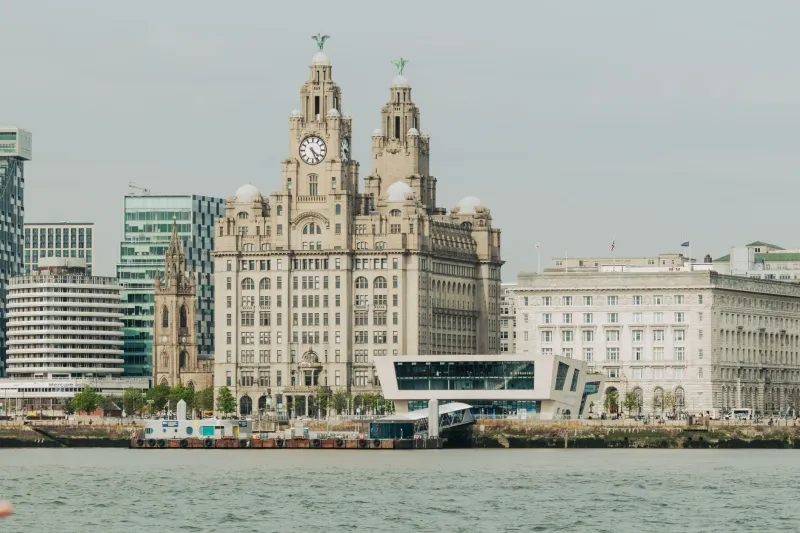
The Royal Liver Building clocks are not subtle. They are giant, pale-faced and perched above the Pier Head like they have been asked to keep an eye on the whole Mersey. You cannot usually climb up for a close inspection, but that is not the point. The pleasure is in the approach: ferry terminals, the Cunard Building, the river wall, the wind doing its best to remove your hat.
Do the classic waterfront loop and then peel off into the streets behind for coffee and old dockland brickwork. The clocks anchor the skyline, and the river gives the whole thing a proper sense of departure. For an early harbour look, stay around the Albert Dock or Pier Head and walk out before the tour groups gather. The Mersey at first light is not glamorous, exactly, but it is honest.
Cardiff: the Pierhead and the bay
The Pierhead Building’s clock tower is one of Cardiff Bay’s best bits of theatre: red brick, Gothic leanings and a face that has watched the bay change from coal dock to waterside promenade. It is a good reminder that harbour time is not only about tides; it is about shift changes and trains, ships and paperwork.
Walk from the Pierhead along the bay edge towards the barrage, or keep it short and potter around Roath Basin before heading into Mermaid Quay for something warm. The bay can feel exposed in a westerly, so dress for it. Stay nearby if you want the water before breakfast; the early light on the Senedd and the old dock buildings is worth the alarm. Check opening times for the Pierhead itself, as the building is not always open just because the clock is showing off.
Hull: municipal confidence by the marina
Hull’s old town and marina make a satisfying clock walk because the water is never far away and the streets still feel shaped by trade. The Guildhall clock is a proper municipal statement: confident, central and not remotely shy. It is the sort of clock that makes you straighten your coat.
Start around Queen Victoria Square, drift through the old town’s brick lanes, then out to the marina for a look at the boats and the Humber beyond. It is a good wet-weather walk too, with plenty of excuses to duck into a cafe or pub and then resume the clock-watching. For an early harbour look, stay in the old town or near the marina and walk the waterfront before the day properly starts. The Humber has a way of making even a short stroll feel like a departure.
Belfast: the Albert Memorial and the river
The Albert Memorial Clock leans. That is the first thing people tell you, and it is true enough to be worth a look. It stands near the River Lagan, a short walk from the waterfront and the old harbour ground, and it has the slightly wonky dignity of a landmark that has survived a lot of city life.
Walk from here along the Lagan to the Titanic Quarter, or keep it compact with a loop through the Cathedral Quarter and back to the river. The clock is a good starting point because it puts you between the city’s old streets and its newer waterfront, which is exactly where Belfast’s port story gets interesting. Stay near the river or the Cathedral Quarter for an early look at the water; the walk out to the harbour is flat, breezy and best done before the coffee queues form.
A note on missing tides
You do not need to miss a tide to enjoy any of these. That is the quiet pleasure of a clock walk: it gives you a route, a pause and a bit of maritime context without demanding a boat. But if you are the sort of person who likes a harbour at first light, book the off-season stay, set the alarm, and let the hands do the rest. The tide will do what it does. You can always catch the next one.