Quiet Binoculars: A Harbour-Wall Guide to Seals, Puffins and Porpoises
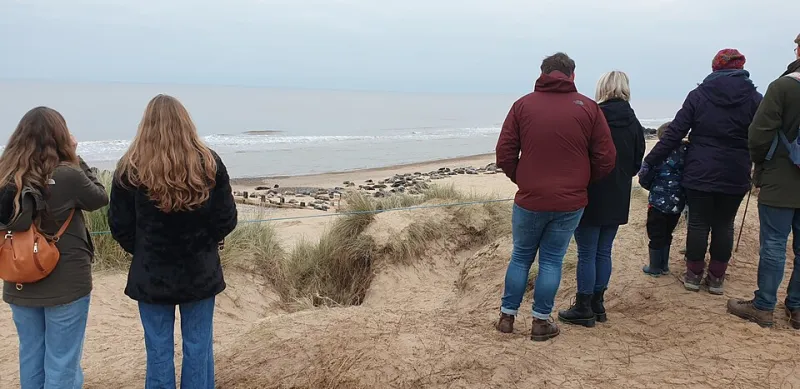
Photo: Christine Matthews , CC BY-SA 2.0, via Wikimedia Commons
You do not need a boat, a guide or a lens the size of a drainpipe to see wildlife from a British harbour wall. You need patience, a pair of binoculars and the good manners to keep your distance. The harbour wall is one of the most accessible wildlife viewpoints in the country: free, usually flat, and often close to a cafe and a loo.
The trick is to slow down. Scan the water, the rocks and the sky. Look for a dark head, a splash, a raft of birds. Then wait. Harbour wildlife is not a theme park; it does not perform on cue.
The low-gear code
Before you go, learn the basics of ethical watching. Keep quiet. Keep back. Keep dogs close and on a lead where birds are roosting or seals are hauled out. Never feed seals or seabirds. Do not block working quays or walk through areas marked as closed. Use binoculars rather than approaching, and check local wildlife trust guidance for the site you are visiting.
Seals are particularly vulnerable. If a seal raises its head and looks at you, you are probably too close. Back off slowly. In autumn, when grey seals are pupping, disturbance can separate mothers from pups. Give them a wide berth.
Six harbour walls worth a slow hour
New Quay, Ceredigion
New Quay is one of the best places in Britain to watch bottlenose dolphins from land. The pier and harbour wall give you a elevated view over Cardigan Bay. Summer is prime time, but dolphins are seen year-round. Scan the water for a fin, a splash or a sudden flock of feeding gulls. Early morning and evening are often best.
Seahouses, Northumberland
Seahouses is the gateway to the Farne Islands, but you do not need a boat ticket to see wildlife. From the harbour wall, look for eiders, terns and grey seals. Between April and July, puffins raft on the water and fly low over the sea. The harbour is busy with trip boats, so keep clear of the loading areas and watch where you stand.
North Berwick, East Lothian
Bass Rock is a white blizzard of gannets, visible from the harbour wall with the naked eye. Bring binoculars and you will pick out puffins on Craigleith and seals in the firth. Spring and summer are the best seasons, but the rock is dramatic in any weather. The seabird centre nearby can tell you what is around.
Tobermory, Isle of Mull
Tobermory harbour is a good place to scan for porpoises. Look for a small, triangular fin and a rolling back; porpoises are shy and do not leap like dolphins. Seals are common too, often bobbing offshore. The harbour is sheltered, which makes it a comfortable spot when the wind is up.
St Abbs, Scottish Borders
St Abbs Head is a seabird city, and the harbour is a fine place to start. Fulmars, guillemots, razorbills and kittiwakes nest on the cliffs, and seals patrol the water. The village is small and the harbour wall is low, so you get a good view without a long walk. Check the tide and wear grippy shoes.
Brixham, Devon
Brixham is a working port, and its breakwater is a good place to watch the water. Grey seals are occasional visitors, and kittiwakes nest on the harbour walls. The fish market and the trawlers mean there is always something going on. Keep out of the way of the boats and do not feed the gulls.
A rough seasonal calendar
Spring is for puffins, guillemots and the first terns. Summer is best for dolphins and porpoises, though they can be seen year-round. Autumn brings seal pupping on many coasts, which means extra care and extra distance. Winter is quieter on the quay but often good for wildfowl, divers and grebes.
What to pack, and what not to do
Pack binoculars (8x42 is a good all-round size), a waterproof, a flask and a tide app. Polarised sunglasses help cut glare from the water. Leave the drone at home. Do not chase a seal along the wall, do not play seabird calls from your phone, and do not assume a quiet animal wants your company.
The harbour wall is a front-row seat, but it is also a workplace and a home for wildlife. Treat it with respect, and you will be rewarded with the kind of sightings that make a whole coastal walk worthwhile.