Rust, Rope and High Water: A Walker’s Guide to Reading Harbour Walls
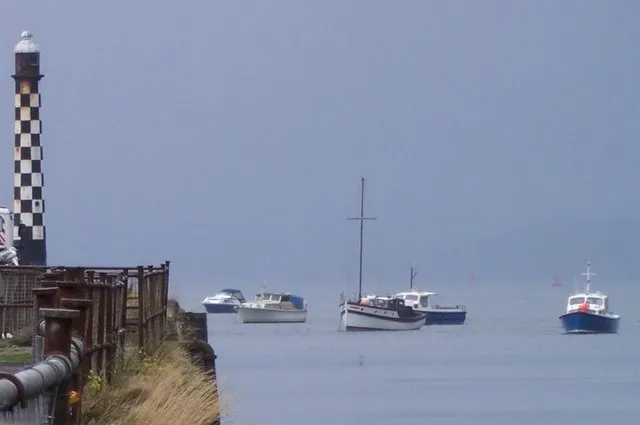
Harbour walls reward slow looking. Most of us treat them as somewhere to lean with a chip paper, but they are also working archives: tide lines, rust trails, polished bollards and patched stone all record how a port has been used, battered and mended. You do not need a museum ticket to read them. You need a decent pair of boots, a tide table and the willingness to walk the same hundred metres twice.
This is a field guide, not a history lecture. Start with the wall itself, then follow the path it suggests.
First, Learn the Language of the Wall
Look for the weed line and the pale stain above it. That is the ordinary high-water mark, and it tells you how much wall is exposed at low tide. Below it, darker stone and barnacle scars show the splash zone. Rust bleeding from a ringbolt is a small clock: the metal has been wet, salt-bitten and used.
Bollards are even better. A bollard worn smooth in one direction has taken a lot of rope from a lot of boats. A capstan — the stout, waist-high drum — was for hauling, not tying up. Old ladders and iron steps usually mark where people scrambled ashore or checked moorings, and repair scars show where storms have taken bites out of the masonry. Granite, limestone and brick all weather differently, so a sudden change in stone can mean a later extension, a different engineer or a bit of Victorian thrift.
Keep off wet breakwaters in rough weather, check tide times before walking below wall level, and never treat a working harbour as a climbing frame. Fishermen need the quay more than you need the photo.
Eight Harbour Fronts Worth a Slow Lap
1. Whitby, North Yorkshire
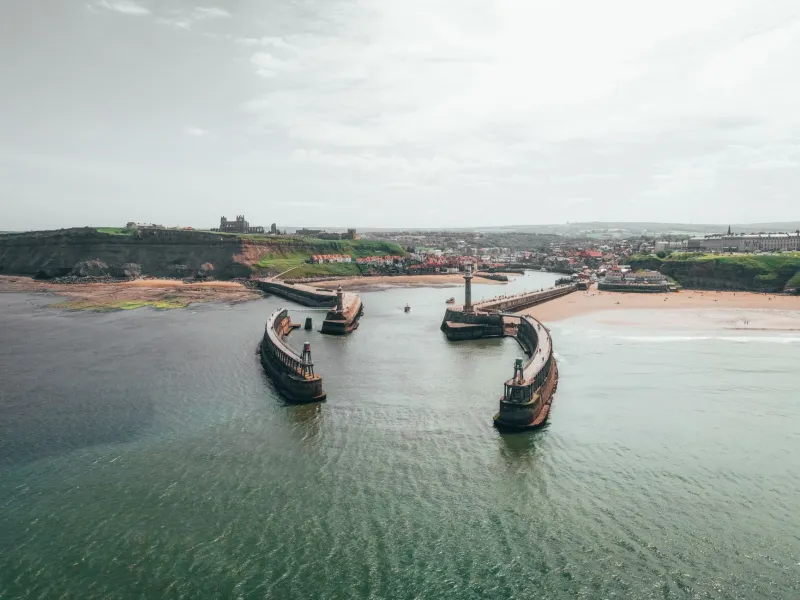
Whitby’s piers are a masterclass in wear. Walk out along the west pier and look at the capstans, the iron ladders and the rope-polished edges. The abbey on the cliff gives the whole place a gothic silhouette, but the harbour wall is the working detail. Back ashore, loop through the old town and up to the whalebone arch. Stay at the White Horse & Griffin, a characterful old inn with plenty of creaky charm.
2. Porthleven, Cornwall
Porthleven’s granite harbour feels built to take a beating, because it was. Look for the storm gates, the heavy blocks and the repair scars that look like clumsy stitching. The outer wall is dramatic in a south-westerly, so save the close inspection for calmer conditions. Follow the coast path east towards Loe Bar for a bracing add-on. The Ship Inn is a proper harbour-side base.
3. Dunbar, East Lothian
Dunbar has two harbours for the price of one. Cromwell Harbour is the older, tighter space; Victoria Harbour is bigger and more exposed. Rusty ladders, old bollards and weathered stone tell of a fishing past and a difficult sea. Walk from the harbours towards Dunbar Castle and the clifftop path. Bayswell Park Hotel sits above the shore and makes a comfortable, unfussy stop.
4. Aberaeron, Ceredigion
Aberaeron is the painted harbour: neat Georgian fronts, bright doors and a wall that looks almost too tidy. Look closer and you will find sluice workings, worn mooring points and repair lines where the harbour has been kept in order. Walk up the Aeron estuary and back for an easy riverside leg-stretch. The Harbourmaster Hotel is the obvious stay, and for good reason.
5. Tenby, Pembrokeshire
Tenby’s harbour is squeezed between medieval town walls and a working quay. The lifeboat slip, the ringbolts and the layered stone are the details to watch. Walk the town walls first, then drop to the harbour and out towards the castle. The Normandie is a handsome base with sea views and a bit of old-fashioned seaside polish.
6. St Ives, Cornwall
St Ives is busy, but the pier still has a working feel. Look for tethering rings, tide-stained granite and the small ladders used by boat crews. Walk the harbour wall, then take the short path around the Island for a different view back at the town. The Garrack Hotel is a quieter stay above the bustle.
7. North Berwick, East Lothian
North Berwick’s harbour walls frame a view of Craigleith and the Forth that is worth the trip alone. Check the bollards, the old slipways and the mix of stone along the quay. A short walk east along the coast gives you sand, rock pools and a proper sense of the firth. The Marine North Berwick is a comfortable, sea-facing choice.
8. Portsoy, Aberdeenshire
Portsoy’s old harbour is a gem of seventeenth-century masonry, with a tight basin and walls that show every season. Look for the rusted ironwork, the worn coping stones and the evidence of repeated repairs. Walk up to the newer harbour and around the headland for a fuller picture. The Boyne Hotel is a straightforward local base.
Turn the Details into a Route
Do not try to see everything. Pick three details — a tide line, a worn bollard, a repair scar — and let them set the pace. A good harbour walk usually goes: wall first, then a short path or street loop, then a pub or café with a view of the water. That way the wall stays the story, not the backdrop.
Carry a small notebook or use your phone. Note the height of the weed line, the direction of rope wear, the colour of the rust. By the time you have done two or three harbours, you will start reading them without thinking. The sea writes plainly. You just have to slow down enough to notice.