Wet Launch, Warm Flask: Six Harbour Slipways for a Tidal Port Day

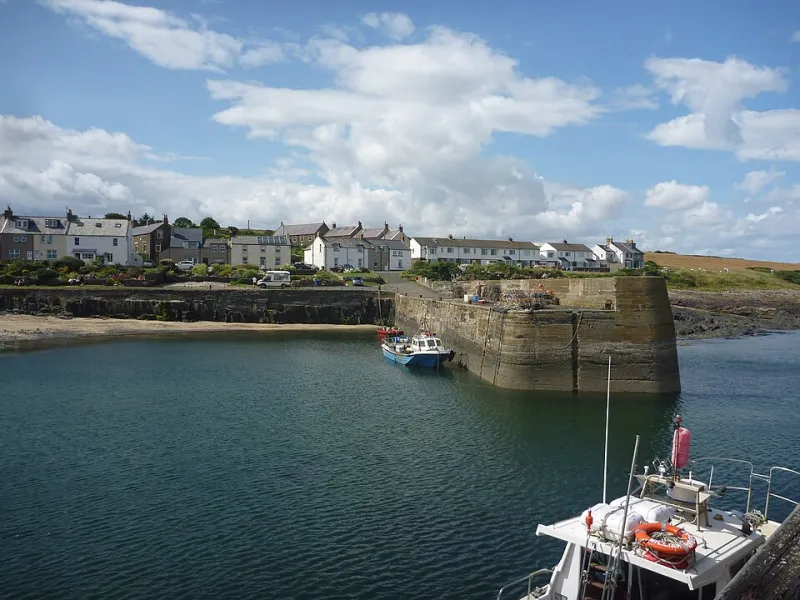
Photo: Rick Obst, CC BY 4.0, via Wikimedia Commons
The slipway is the most honest bit of a harbour. No bunting, no plaque, just a strip of wet concrete angled at the water and a sign telling you where not to park. For paddlers it is the front door to a working port — and the trick to a good day out is not how far you paddle, but how neatly you fit around the quay’s own business.
This is a guide to six harbour slipways around the UK where a kayak, a flask and a pair of walking boots can share the same afternoon. The formula is simple: launch when the tide and the traffic allow, follow a sheltered route, land somewhere you would happily sit for half an hour, then walk off the salt before the light goes. Check the harbourmaster’s notices, pay any launch fee, wear a buoyancy aid and treat the tide table as the first item on the kit list.
Read the quay before the chart
Harbours are not playgrounds with a sea view. They are workshops, car parks, fish landings and ferry terminals that happen to be wet. Before you unstrap the boat, look for the launch fee board, the hose-down tap, the yellow lines and the bit of quay where the forklift turns. Ask at the harbour office if you are unsure. Then check the wind against the tide: a sheltered harbour can turn lumpy at the mouth in minutes, and a friendly offshore breeze can be a long paddle home.
The best port days are short on ambition and long on timing. Aim to be on the water an hour or two either side of high water, keep the route inside the harbour walls or estuary until you know the conditions, and tell someone where you are going. The kettle can wait; the tide will not.
Padstow, Cornwall: the estuary classroom
Padstow’s harbour slipway puts you straight into the Camel Estuary, which is about as good a place as any to learn how a tide runs in a working port. Launch on the town side, keep clear of the ferry and fishing traffic, and paddle across to Rock only if the tide and your confidence agree. The eddies and sandbanks change with the water, so a local chart and a word with the harbour office are worth more than a strava segment.
Land at Rock for a picnic on the dunes, then walk up Brea Hill for the view back over the estuary. If the weather turns, Padstow’s chandlery and cafés are a short stroll from the slipway, and there are plenty of harbour-side beds for anyone who decides the drive home can wait until morning.
Aberaeron, Ceredigion: the river behind the wall
Aberaeron is a pocket-sized harbour with a slipway near the mouth and a river running quietly behind it. On a flooding tide, paddle up the Aeron rather than out to sea, keeping an eye on low bridges and moored boats. It is sheltered, birdy and short enough to leave plenty of time for lunch.
Land back at the quay and walk the riverside path towards Llanerchaeron, a National Trust estate tucked into the valley. The harbour itself is a handsome Georgian curve of painted houses, and the Harbourmaster Hotel does a fine line in off-season rooms if you want to make a night of it. This is a launch spot for people who like their paddling interspersed with cake.
Emsworth, Hampshire: the millpond launch
Emsworth’s public slipway gives you access to Chichester Harbour, a maze of channels, mudflats and moorings that rewards a slow, tide-aware approach. Launch near the quay, check the harbour authority’s notices and keep to the deeper water as the tide drops. The route towards Prinstead and Thorney Island is sheltered but shallow, so plan to be back before the mud starts showing its teeth.
Ashore, walk up to Warblington church and its ruined chapel, or simply follow the millpond path around the town. Emsworth has a proper harbour chandlery, a couple of good bakeries and a cluster of inns for an overnight stop. It is the sort of place where a wet boat and a warm flask feel entirely normal.
Whitby, North Yorkshire: the Esk run
Whitby’s inner harbour slipway is not the place for a casual swell-day launch. The Esk runs through the town, and the harbour mouth can be fierce when wind and tide disagree. On a calm day, paddle upstream for a sheltered hour among the moored boats, or head out between the piers only if you have checked the conditions and have the experience to handle the run back.
Land at the town quay and walk the Cleveland Way towards Saltwick Nab, or climb to the abbey for the classic view down the harbour. Whitby has chandlers, fish-and-chip shops and a good spread of B&Bs and harbour hotels. It is a port break with a paddle attached, rather than a paddling trip with a town attached — and all the better for it.
Crail, Fife: the wee harbour with a big horizon
Crail’s slipway is small, steep and honest about the sea beyond. The harbour itself is sheltered, but the coast towards Fife Ness is exposed, so use the slipway for a short paddle around the harbour walls and Roome Bay rather than an ambitious point-to-point. Watch the tide and the weather, and keep clear of creels and moored boats.
Ashore, the Fife Coastal Path runs through the village towards Anstruther, with crab rolls and a harbour wall at the end of it. Crail has a handful of cottages and guesthouses for an off-season stay, and the chandlery-sized harbour shop is the place for the bits you forgot. It is a launch spot for a short paddle and a long walk — which is often the best ratio.
Kirkcudbright, Dumfries & Galloway: the artists’ tide
Kirkcudbright’s harbour sits on the Dee estuary, and its slipway is a gentle introduction to a river that still carries fishing and sailing traffic. Time your launch with the tide, paddle downstream towards the estuary mouth only if the wind is kind, and keep an eye on the sandbanks. The town itself is a handsome grid of colour-washed houses that has long attracted painters, and the quay is a fine place to land and unclip.
Walk up to MacLellan’s Castle and along the riverside, then find a café for a late lunch. The Selkirk Arms is the obvious overnight choice, with a warm bar and a proper breakfast. Kirkcudbright is a good reminder that a port day does not need a dramatic coastline: a tidal river, a slipway and a decent sandwich will do.
Land, lunch and the legs after
The best landing spots are the ones you would choose without a boat. A harbour wall with a bench, a patch of grass above the tide line, a beach that does not disappear at high water. Carry a flask, a picnic and a dry bag, and leave nothing but a wet footprint. If the harbour has a public slipway, it usually has a tap and a bin nearby; use both.
Then walk. Not a epic, just twenty minutes along the quay or up the coast path. It loosens the shoulders, dries the kit and gives you a second look at the port from the land. The walk is not an add-on to the paddle; it is the bit that turns a launch into a day out.
Make it a port break
All six places have beds within a short walk of the water, which matters when the tide table says high water at 7am and the kettle is in the room. Off-season rates make a spontaneous night away easier, and a harbour town in November has a particular charm: fewer boats, more birds, and a pub that is glad to see you. Pack a dry bag for the wet kit, a warm hat for the walk back and a torch for the early sunset.
Kit and courtesy
A kayak, a buoyancy aid, a pump, a paddle leash, a tide table, a weather app that tells you the gust speed rather than the vibe, and a flask. Add a launch fee in cash and a willingness to move your car if the harbourmaster asks. The quay was here before your boat and will be here after it; the least we can do is leave it tidy.