Diesel, Twine and the Real Postcard: Six Harbour Edges Best Seen on Foot
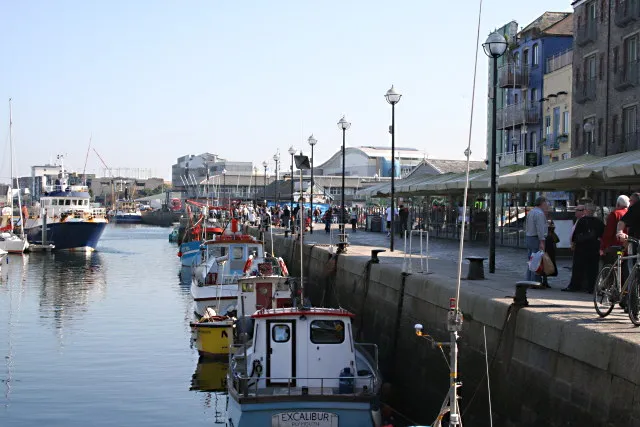
Photo: Tony Atkin, CC BY-SA 2.0, via Wikimedia Commons
The postcard view is easy. It is the bench, the lighthouse, the pastel terrace and the queue for ice cream. The back of the quay is harder work and much more useful. It is where the port keeps its tools: repair sheds with the doors rolled up, fish boxes stacked in leaning towers, rope bins that smell of tar and salt, and chandlery back doors propped open with a paint tin. If you want to understand a harbour, walk away from the view and towards the forklift.
This is not a licence to wander into a working deck. It is a guide to the edges you can legitimately read on foot, with route notes and a few manners. The reward is a port that stops performing and starts explaining itself.
How to read the working edge
Start with the ground. Yellow lines, painted walkways, bollards and drain covers tell you where the public route ends. Follow those, not the crowd. Then look for the clues that do not make it onto tea towels: ice machines, fish boxes, tyre marks, welding curtains, a stack of pallets with the port's name stencilled on the side. A chandlery back door is often more informative than its shop window. So is a repair shed that smells of resin and diesel.
Etiquette is simple. Ask before photographing people or boats. Do not move boxes, ropes or ladders. Keep dogs close and children closer. If a gate is shut, it is shut. If a forklift is moving, you are in the wrong place. And if someone in oilskins says you cannot go that way, thank them and go another way. The back of the quay is a workplace first and a viewpoint second.
Brixham: follow the forklift
Brixham's postcard is the inner harbour and the replica trawler. Its story is on the other side of the water, where the fish quay and repair yards get on with it. Walk from the inner harbour around the Strand and towards the breakwater, keeping to the marked footpath. The back corner here is a lesson in small-boat economics: ice, boxes, fuel, a shed with its doors open and a chandlery that looks like it has been fitted out by someone who knows exactly where everything is.
Route note: a flat, mostly paved loop of about 40 minutes if you do not stop; longer if you read the noticeboards. Stay nearby at the Berry Head Hotel for the clifftop walk back, or pick a harbour B&B if you want to be on the quay before the day-trippers.
Newlyn: the lane behind the market
Newlyn is a proper working port, and the fish market is not a visitor attraction. That is the point. Walk from Newlyn Bridge along the back lanes and look for the net lofts, the chandlery back doors and the sheds that service the fleet. The least photogenic corner is often the most honest: stacked boxes, a coil of warps, a hand-painted sign, a van unloading.
Route note: keep to the pavement and the public quay edges; the market floor and fish handling areas are for badge holders. Stay in Penzance and walk or bus over, or find a B&B on the Newlyn side for an early start.
Whitby: upstream of the postcard
Everyone photographs the abbey and the swing bridge. Fewer walk up the Esk past the boatyard and the fish sheds, where the working river shows you how the harbour pays its way. The back of the quay here is a mix of repair sheds, chandlery, and the sort of clutter that makes a boat go. Look for the slipway, the crane, and the paint-stained doors.
Route note: follow the west bank path upstream and back, then cross for the abbey if you must. Stay at Bagdale Hall or a harbour-side guesthouse; both put you within a short walk of the working edge.
Fleetwood: the old fish dock
Fleetwood's back-of-quay story is written in its dock walls. The trawler heritage is here, along with the sheds and the sense of a port that has changed gear. Walk the dock edge where public access allows, read the memorial and the old industrial buildings, and look for the rope, the paint and the repair work that keep the remaining fleet going.
Route note: it is exposed, so take a windproof layer. Stay at the North Euston Hotel, which is handy for the dock and the seafront.
Oban: behind the ferry queue
Oban's front is ferries and fish and chips. Its back is the railway pier, the seafood sheds and the service corners where the town's working life continues around the queue. Walk the North Pier area and the public edges, then look inland to the chandlery and repair yards. The least photogenic corner is a good place to watch a port do its admin.
Route note: keep clear of ferry loading lanes. Stay at the Perle Oban Hotel or a guesthouse on the Esplanade for a short walk to the pier.
Lerwick: the pelagic edge
Lerwick's Victoria Pier is the obvious bit. The working edge is where the pelagic boats and the service sheds sit, all ropes, fenders and industrial paint. Walk the public quay edges and look for the signs of a port that works in weather. It is not pretty in the postcard sense. It is better than that.
Route note: this is a long way for a weekend, so make it a proper trip. Stay at the Shetland Hotel or a town guesthouse and use the ferry or flight as part of the break.
The practical bit
Wear boots you do not mind getting tar on. Take a windproof layer even in summer. Do not cross barriers or wander into sheds. Use the harbour office or noticeboards if you are unsure where the public route goes. And go off-season if you can: the back of the quay is at its most readable when the crowds have gone and the port has its sleeves rolled up.